Yik Yak is a social media platform similar to Twitter except all users remain anonymous allowing people to post virtually anything they want to a thread that all users within a certain mile radius can view. The social media application’s main takeaway is the ability to post anonymously to a public thread. The app does not require a user to enter any personal information besides their email address. No users on the app have a username. The app promotes people to confide in each other anonymously but unfortunately, users often abuse this feature by posting inappropriate comments or lies about individuals and groups.
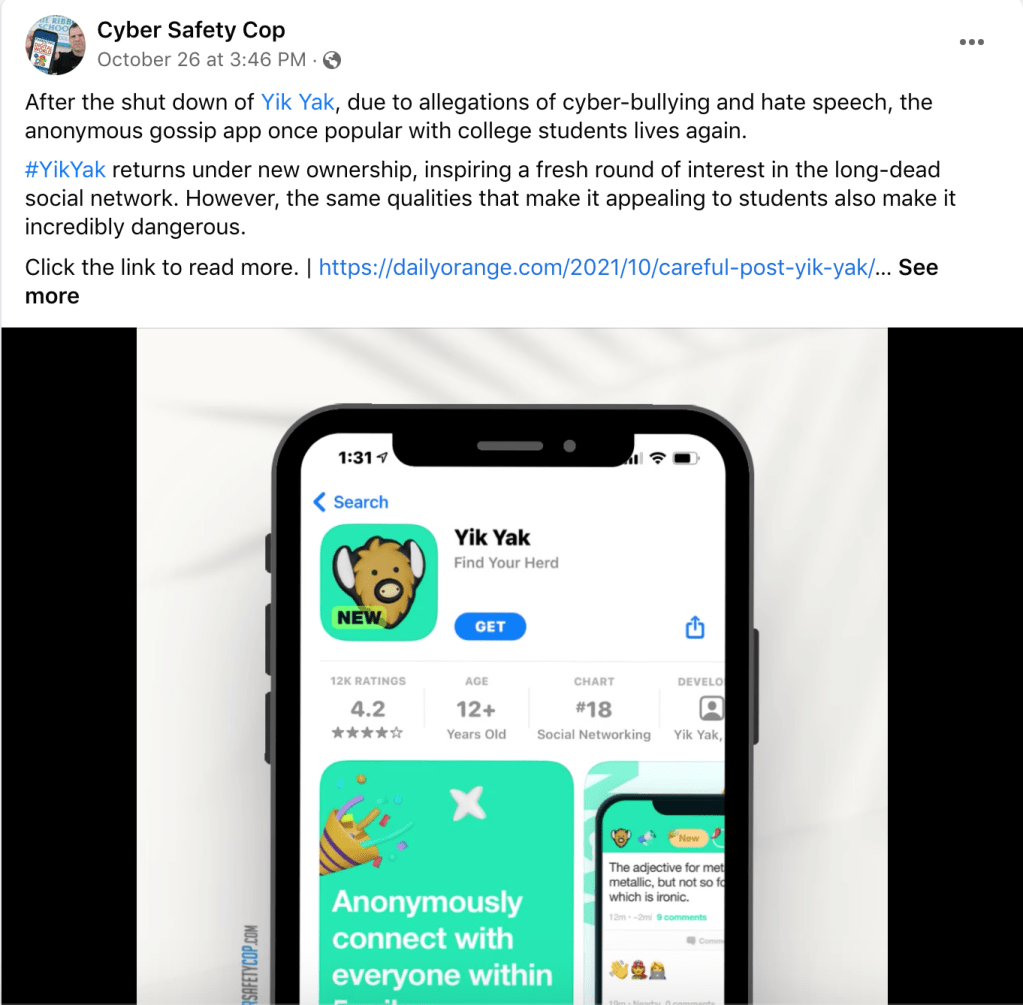
On Yik Yak each user can only see other people’s posts within a certain mile radius. A user can see a post from up to five miles away which keeps the content specific to one area. When users post or are on their feed one will notice a red pin emoji and a distance in miles in the bottom left corner of every post. The emoji and distance allow users to see how far away the person who posted is from them. The distance feature creates a sense of community on college campuses because students can relate to things that go on at school while remaining completely anonymous.
However, in 2017 college and high school campuses banned the anonymous app because of a high volume of racist, homophobic and sexist posts. The app store and the android store eventually removed the social media app due to massive amounts of controversy. The app has since been purchased and redone by a new company. The company edited some key features of the app in order to make the platform a safer space. When a post gets enough downvotes, called down yaks, Yik Yak will remove the post from the thread. However, a problem arises when people on the app choose to up yak a negative post or a misleading post.
UW-Madison Yik Yak members have begun attacking Greek life organizations and leading false rumors or accusations being constantly posted to the thread. Users mainly attacked the sorority Kappa Kappa Gamma accusing them of being racist, having eating disorders and being intolerant of poor people. Head Recruitment Chair Mia Berman, a junior at UW-Madison, actively recruited members during the peak of sorority slander.

The anonymous aspect of Yik Yak makes it easier for people to join in on a group or person being ridiculed or falsified. “I think the anonymous platform is definitely an issue because it can let people say things that they wouldn’t necessarily say when it’s not anonymous, so it can really hurt people because it takes away that kind of blame and emotional aspect of what you could say to somebody,” Mia said.
Hateful messages grow when people join in on the attack. Yik Yak should have deleted multiple posts targeted at Kappa but since the posts only received up yaks the posts remained up. In fact, some of them are still highly rated and appear on the “Local Top Yaks” list which is a feature on the app. Yik Yak allows users to join in on hateful messages that the users deem appropriate or warranted.
Another harmful message that can spread on social media is false allegations of sexual assault. On college campuses this can be helpful or harmful. Officer Diego Hernandez is the downtown liaison community officer and deals directly with all of Greek Life and the issues that arise. Diego has worked for the UW-Madison Police Department for five years now and knows about Yik Yak.
Recently, members of Yik Yak accused the fraternity FIJI of sexual assault and users gathered to protest the fraternity outside of their chapter house. “With a claim that is made on social media and not directly to police, there is not a lot of follow-ups that we can do with the person stating that they have been victimized,” Officer Hernandez said. Yik Yak users led an online protest on FIJI and ridiculed them on the local Yik Yak feed. “That situation actually was not what Yik Yak was portraying it to be. We had no reason to believe that the allegation was valid,” Hernandez said.
Anonymous posting allows people to target individuals or groups without having any ties to the post personally. People can avenge personal vendettas and slander the names of other students they don’t like. This allows for misinformation about one’s character to be publicly spread. While the name of one person is slandered the name of the user who posted remains anonymous. Users can completely make up a lie about a person and make it a trend on Yik Yak creating a wave of users to up yak it.
Andrew Arrondo is a person who was targeted, a junior studying finance and real estate at UW received strange and false allegations about him using hard drugs. A user created a post that said Andrew had been seen smoking crack with the homeless people near Potbelly on State Street. “Hopefully it’s not someone just trying to taint my reputation or spread false rumors about me,” Andrew said.
Users seem to not understand the backlash or negative effects false posts can bring to the person who was targeted. “I had friends of friends or people not in my immediate friend group come up to me and ask, ‘hey do you actually smoke crack’ or ‘I heard you’re doing hard drugs now’ I would kind of just laugh it off but in reality, it was upsetting,” Andrew said. He is one of many students who face the same ridicule and slander because of Yik Yak. Users would not post many of the things seen on Yik Yak if anonymity wasn’t a factor. Users on other social media platforms do not see the same levels of slander or hate as they do on Yik Yak.
Yik Yak continues to have users and posts because it allows users to find a sense of community and to be able to confide in others while also not having to reveal any personal information. While users continue to post hate there are still many people who use the app for comedic relief and asking general questions.
 Madison Times